

Abiy Ahmed Can’t Hide Ethiopia’s Collapse Behind Diplomacy
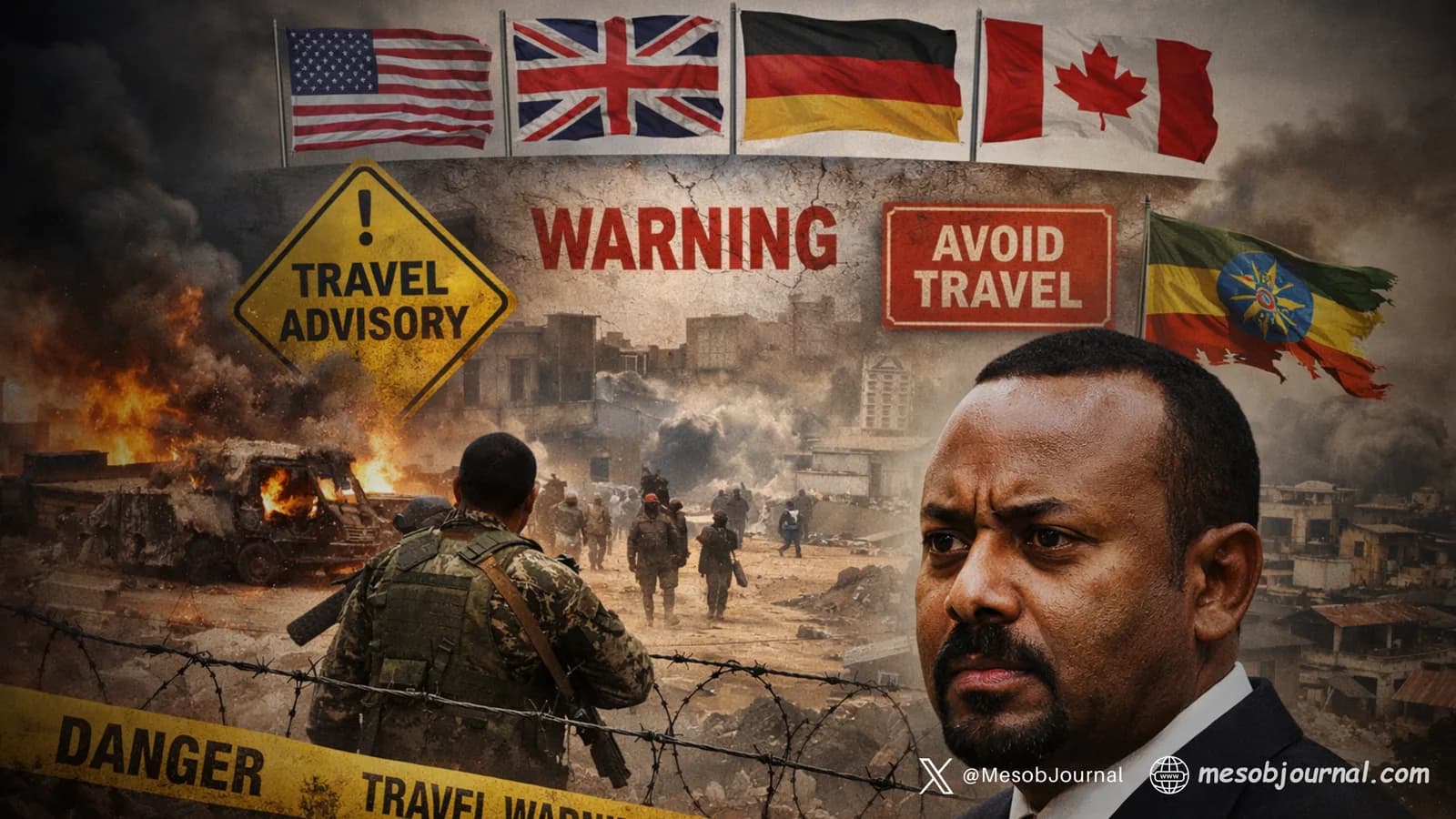
You can lie in speeches. You can posture at summits. You can wrap failure in diplomatic language and hope the world only reads the headline. But official travel advisories have a way of cutting through the performance. They are written carefully, especially by countries that have long been friendly to Ethiopia, often too carefully, and still the picture that emerges from Ethiopia is ugly.
Read what the United States, Britain, Germany and Canada are telling their own citizens in recent official advisories. Strip away the polite wording and the message is plain enough: Ethiopia under Abiy Ahmed is deeply unstable, dangerous across large stretches of territory, and increasingly hard even for foreign governments to navigate. That is the reality. Everything else is packaging.
The funny thing is that these advisories still try to be gentle. Governments don’t like saying openly that a country is coming apart. So they use the soft vocabulary of statecraft: “reconsider travel,” “avoid non-essential travel,” “security conditions may deteriorate,” “limited consular assistance.” It sounds restrained. Almost clinical. But once you read past the tone, what they are actually describing is a country burdened by armed conflict, kidnappings, unrest, road insecurity, communications shutdowns, ethnic violence and areas where even embassies can do very little if something goes wrong.
That is not a minor image problem for Abiy Ahmed. It is a political verdict.
The U.S. advisory is especially revealing. Washington keeps Ethiopia at Level 3, meaning Americans are told to reconsider travel, and then proceeds to mark huge parts of the country as places not to visit at all. Tigray. Amhara. Afar. Gambella. Benishangul-Gumuz. parts of Oromia. Several border zones. The reasons listed are not cosmetic problems. They include unrest, crime, kidnapping, terrorism, landmines, communications disruptions and even exit bans. A state that is secure does not get described like that by governments that usually bend over backwards to avoid embarrassment in their bilateral language.
Britain tells the same story, just in its own bureaucratic accent. It warns against travel to multiple Ethiopian regions and repeatedly points to armed violence and deteriorating conditions. Germany is even more revealing in one important respect: outside Addis Ababa, Berlin makes clear that its ability to provide help is sharply limited. That single point matters. It tells you that the insecurity is not just theoretical. It is serious enough that foreign governments do not trust normal access and normal reach beyond the capital. Once you get to that stage, the fantasy of a fully functioning and confident regional power starts to collapse.
Canada adds another layer to the same picture. It warns about civil unrest, violence, armed conflict and crime, and notes that the situation can worsen without warning. That line appears often in such advisories for a reason. It means volatility has become normal. It means the state is not seen as fully predictable. And when unpredictability becomes part of a country’s international security profile, that is already a sign of deeper failure.
Then there is the issue Addis Ababa would prefer people not dwell on: communications shutdowns. The advisories note that internet and phone services can be restricted or cut during periods of unrest. That is not just a technical inconvenience. It is part of how fragile states try to manage crises they cannot politically solve. Shut the lines. Control the narrative. Reduce visibility. Buy time. But every shutdown tells the same story: this is a government reacting to instability, not mastering it.
And that is where Abiy Ahmed’s whole performance starts to look hollow.
For years, he has tried to present Ethiopia as the natural heavyweight of the Horn of Africa, the indispensable state, the one with the moral and political authority to speak in the language of regional order. But what order is this, exactly? What authority does a government project when vast areas of its own territory are under warning for conflict, kidnappings, unrest or worse? What regional leadership is being claimed here when multiple foreign governments are effectively telling their citizens that large parts of the country are unsafe and that outside Addis they may not be reachable in any meaningful way?
This is the part many analysts still dance around. They keep writing as if Ethiopia’s instability is an unfortunate side note to a larger story of strategic relevance. No. It is the story. You cannot separate Abiy Ahmed’s regional ambitions from the internal disorder that keeps spreading across Ethiopia itself. A government struggling to impose durable authority at home has no business behaving like a power entitled to redraw the strategic map of the Horn.
That matters even more when border zones and Red Sea rhetoric enter the conversation. Ethiopia’s political class has spent years trying to normalize language about “access,” “historic rights,” and strategic necessity. But no amount of ambitious talk can hide the contradiction. A state facing persistent internal violence, deep regional fractures and recurrent emergency measures is in no position to posture as though it has earned the right to pressure others over sovereignty questions. In fact, the more unstable Ethiopia becomes internally, the more dangerous that rhetoric looks externally.
And this is where the hypocrisy becomes impossible to ignore. The same Western actors that often indulge Addis politically are simultaneously warning their own citizens about the conditions inside Ethiopia. In public diplomacy, they soften. In travel advisories, they tell the truth. Not the full truth, perhaps. But enough of it.
Enough to see that the real Ethiopia story under Abiy Ahmed is not renaissance. It is not reform. It is not the polished branding campaign still recycled in some policy circles. It is a state under severe strain, trying to sell strength while managing fragmentation.
Even Addis Ababa’s defenders fall back on one tired line: the capital remains relatively calm. Fine. Capitals often do. That is not proof of national stability. It can just as easily be proof that the crisis is being contained politically at the center while the periphery burns. History is full of governments that looked composed in the capital right up until the wider reality caught up with them.
That is why these advisories matter. Not because Western governments are moral referees. They are not. And not because travel advice is a perfect measure of state health. It isn’t. They matter because even governments that have often been friendlier to Ethiopia, and that have backed Addis Ababa through one crisis after another, are still forced to describe the country in terms that point to serious internal disorder. When even Ethiopia’s sympathetic partners cannot conceal the scale of the danger, the real picture is worse than the diplomatic language suggests.
Once you understand that, the spin becomes harder to take seriously.
Abiy Ahmed can stage optics. He can make speeches. His supporters can keep selling the image of order, reform and national revival. But the official warnings tell another story, and it is much harder to fake. Behind the polished language sits a blunt reality: conflict, insecurity, fear, blackouts, shrinking reach, and a state that no longer looks firmly in command of itself.
That is Ethiopia’s image problem now. More importantly, it is Ethiopia’s political reality.
And no amount of diplomatic cushioning can hide it anymore.
Related stories
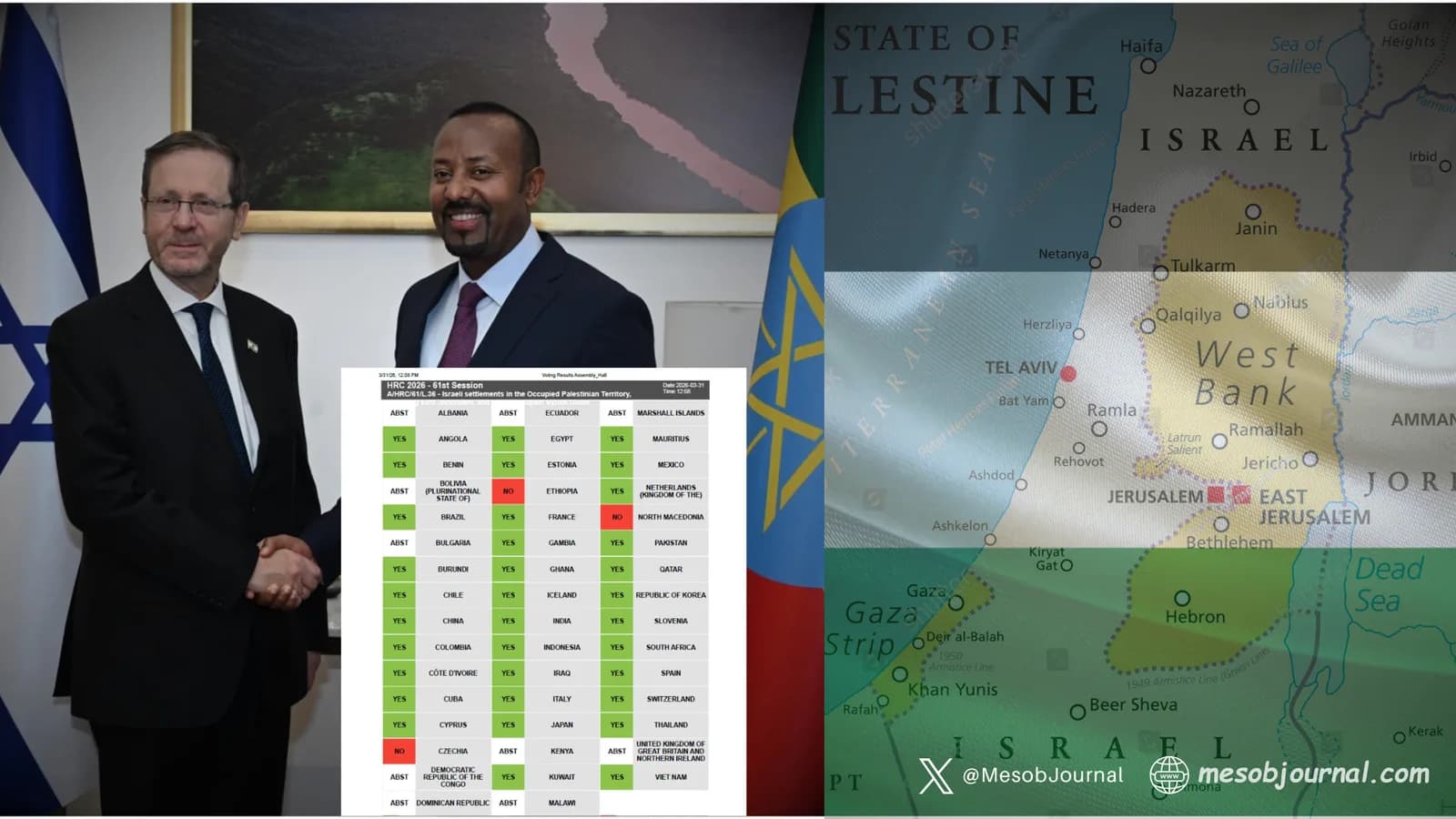
Abiy Ahmed’s Shameful UN Vote Betrays Africa and Palestine
There are votes that expose a government’s priorities more clearly than any speech ever could. Ethiopia’s “No” vote at the UN Human Rights Council on 31 March, against a resolution reaffirming the illegality of Israeli settlements in the Occupied Palestinian Territory and the o
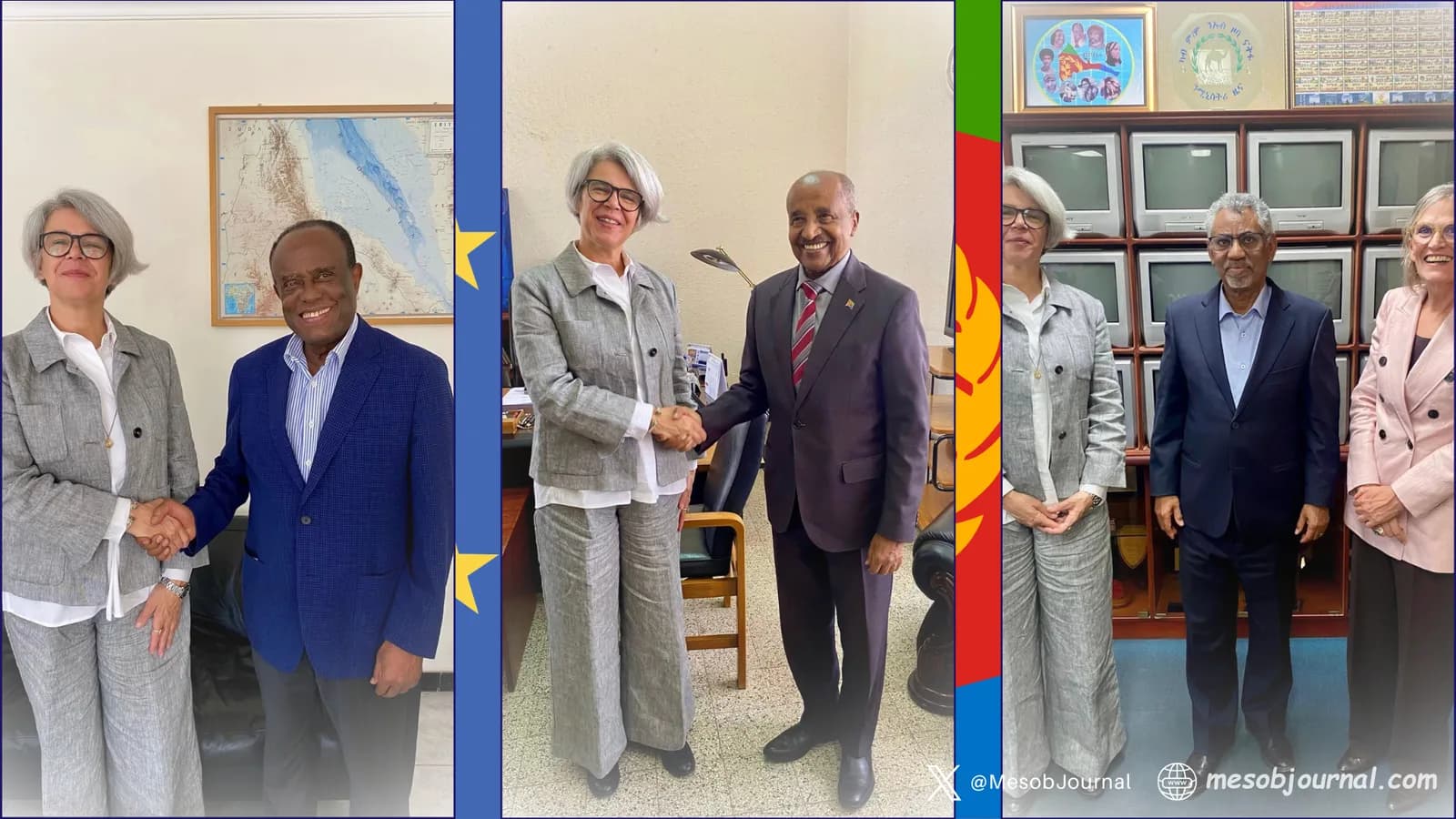
Why Eritrea Matters Again to the European Union
Brussels is not undergoing a moral conversion. It is responding to a harsher strategic map in the Horn of Africa and the Red Sea. Annette Weber, the European Union’s Special Representative for the Horn of Africa, was in Asmara this week, and the visit matters less for any dramati
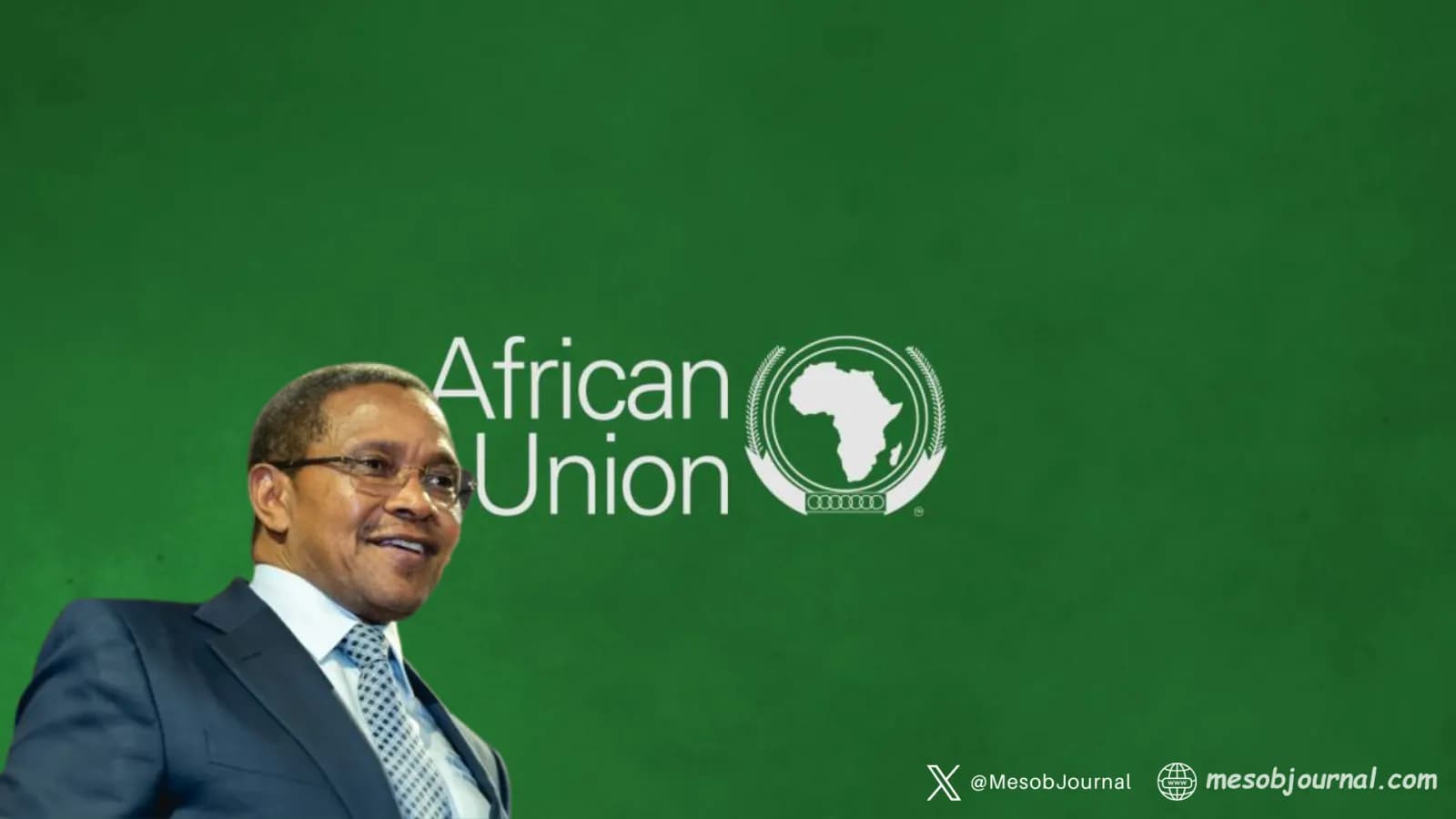
AU appoints Kikwete as Horn of Africa, Red Sea envoy
The African Union Commission has appointed former Tanzanian president Jakaya Mrisho Kikwete as the AU High Representative for the Horn of Africa and the Red Sea, placing a veteran East African statesman at the center of one of the continent’s most sensitive geopolitical files. Th
Opinion Piece Published on Jerusalem Post by Dr Shmuel Legesse on 15 March 2026 – A Response
An opinion piece titled, "Middle East's future may be decided in the Horn of Africa : The Red Sea is becoming the centre of global power." was published on #JerusalemPost on 15 March by Dr Shmuel Legesse . The author is an international educator, community activist, a diplomacy