

Eritrea's Strategic Role in U.S. Counterterrorism Strategy
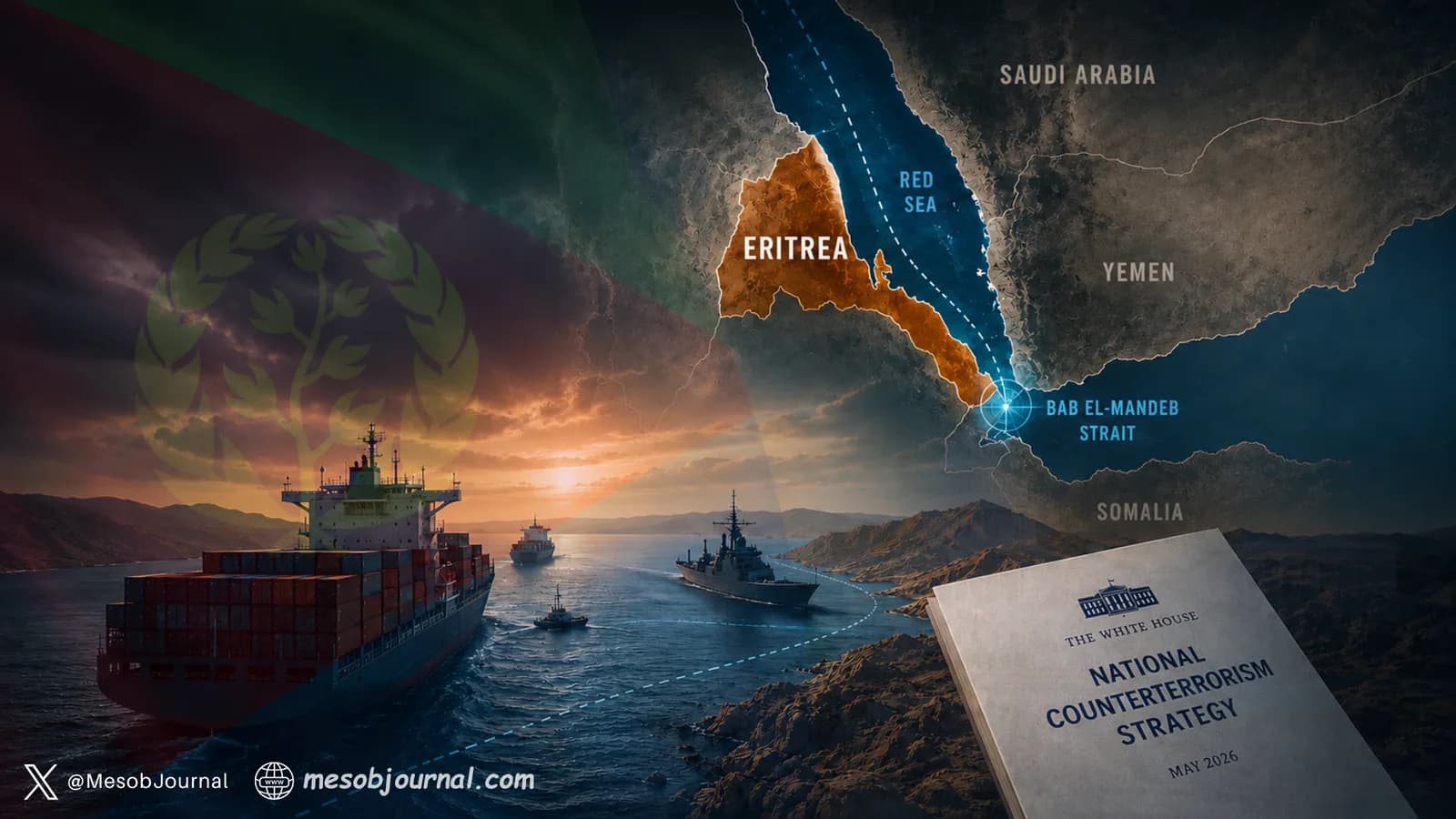
The new U.S. counterterrorism strategy released by the White House never mentions Eritrea once. Not directly. Not even in passing.
Yet by the time one finishes reading the document, Eritrea’s absence begins to feel less like irrelevance and more like an unspoken geopolitical fact. Nearly every major security concern outlined in the strategy surrounds Eritrea geographically: the Red Sea, Bab el-Mandeb maritime chokepoint, Yemen, Houthi attacks on shipping, Somalia-based militancy, Sudan’s instability, and the growing vulnerability of global trade corridors.
The document’s geography tells its own story.
Because the strategy itself reveals something larger about how Washington’s priorities are evolving in the Horn of Africa and the Red Sea basin. The document reflects a United States increasingly less interested in ideological regional engineering and more focused on strategic infrastructure, maritime security, counterterrorism coordination, and the uninterrupted flow of global commerce. In that environment, geography has a way of reasserting itself.
And geography has always favored Eritrea.
The White House strategy is fundamentally structured around mobility, chokepoints, and containment of asymmetric threats. The document states plainly that the United States “will not allow strategic waterways such as the Strait of Hormuz or Red Sea to be held hostage by non-state or state actors.” The report specifically references the threat posed by Houthi attacks on maritime traffic and signals continued willingness to use military force to secure shipping lanes if necessary.
That reflects a broader reality that has transformed the Red Sea from a secondary regional concern into one of the world’s most sensitive geopolitical corridors.
Roughly 12–15 percent of global trade passes through the Red Sea and Suez route. Energy shipments from the Gulf, European-Asian trade flows, military logistics, and global supply chains all converge in a narrow maritime space stretching from the Suez Canal to the Bab el-Mandeb Strait. When instability erupts there, the consequences ripple far beyond the Middle East or the Horn of Africa.
The Houthi attacks on commercial vessels over the past two years accelerated that realization dramatically. Shipping companies rerouted vessels around southern Africa. Insurance costs surged. Naval deployments expanded. What had once been treated as a regional security issue suddenly became a global economic vulnerability.
That shift appears deeply embedded inside the White House strategy.
The document repeatedly emphasizes maritime security, flexible regional partnerships, targeted counterterrorism operations, and “burden-sharing” approaches rather than large-scale American military entanglements. The underlying message is clear: Washington still intends to secure critical waterways, but increasingly through selective engagement and strategically positioned regional relationships.
This is where Eritrea quietly returns to the map.
From a purely geographic standpoint, Eritrea occupies one of the most consequential coastlines in the entire Red Sea basin. Its long western Red Sea frontage sits directly across from Yemen and near the southern approaches to the Bab el-Mandeb Strait — one of the world’s most strategically exposed maritime chokepoints. Any serious discussion of Red Sea security architecture inevitably passes through waters adjacent to Eritrean territory.
For years, that reality often sat behind layers of diplomatic isolation, sanctions policy, and regional political disputes. But strategic environments change. Maritime crises change calculations even faster.
Recent reporting by Reuters and The Wall Street Journal suggesting Washington is exploring the lifting of sanctions on Eritrea should be viewed within precisely that context. The apparent shift is less about sudden ideological convergence and more about the reordering of strategic priorities around the Red Sea.
That distinction matters because it explains why the tone emerging from Washington appears increasingly pragmatic rather than transformational.
The White House strategy itself offers clues. Unlike the expansive interventionist frameworks that shaped parts of U.S. policy after 9/11, the new document is narrower and more interest-driven. It prioritizes targeted counterterrorism cooperation, maritime access, trade security, and protection of critical infrastructure over ambitious state-remaking projects.
The Horn of Africa fits directly into that evolution.
Somalia remains central to U.S. counterterrorism concerns because of Al-Shabaab and wider jihadist networks. Sudan’s fragmentation has created another layer of instability along the western Red Sea corridor. Yemen remains volatile. At the same time, global competition around ports, naval access, shipping routes, and logistical influence has intensified across the region. China, Gulf states, Türkiye, Western navies, and regional powers are all increasingly active in adjacent maritime zones.
Under those conditions, Eritrea becomes difficult to compartmentalize out of long-term planning simply because of where it sits.
Even without formal alliances or dramatic diplomatic announcements, strategic relevance accumulates through geography. Ports matter. Coastlines matter. Proximity matters. Stability matters.
That does not mean Washington and Asmara suddenly share identical worldviews. Nor does it erase years of mistrust between the two sides. The political distance remains real. So do unresolved disagreements over governance, sanctions history, and regional alignments.
But geopolitics rarely waits for perfect diplomatic alignment.
Historically, major powers often return to regions they once marginalized when strategic conditions shift faster than old assumptions. The Red Sea appears to be producing exactly that kind of recalibration. What once looked peripheral has become central. What once seemed containable now sits astride vital commercial arteries.
The White House strategy reflects that transition indirectly but unmistakably.
Its repeated emphasis on maritime navigation, counterterrorism flexibility, regional partner capacity, and strategic waterways points toward a future in which the Red Sea is treated less as a supporting theater and more as a core security corridor.
And in any durable Red Sea framework — whether economic, naval, counterterrorism-based, or diplomatic — Eritrea’s location ensures it cannot easily be bypassed forever.
The report never says that outright.
It doesn’t need to.
Related stories
Washington Moves to Lift Eritrea Sanctions as Asmara Sets the Record Straight
The United States is preparing to lift sanctions imposed on Eritrea, Reuters reported, in a move that could mark one of the clearest signs yet of a shifting Washington approach toward the Horn of Africa and the Red Sea corridor. Reuters, citing an internal U.S. government documen
Sanctions, Sovereignty, and the Red Sea: A Critical Examination of Eritrea, Western Narratives, and the Reuters Framing
The recent indication that the United States may lift sanctions on Eritrea marks a significant moment in the geopolitics of the Horn of Africa and the Red Sea. While Reuters frames the development as a strategic recalibration driven by shifting alliances and maritime tensions, th
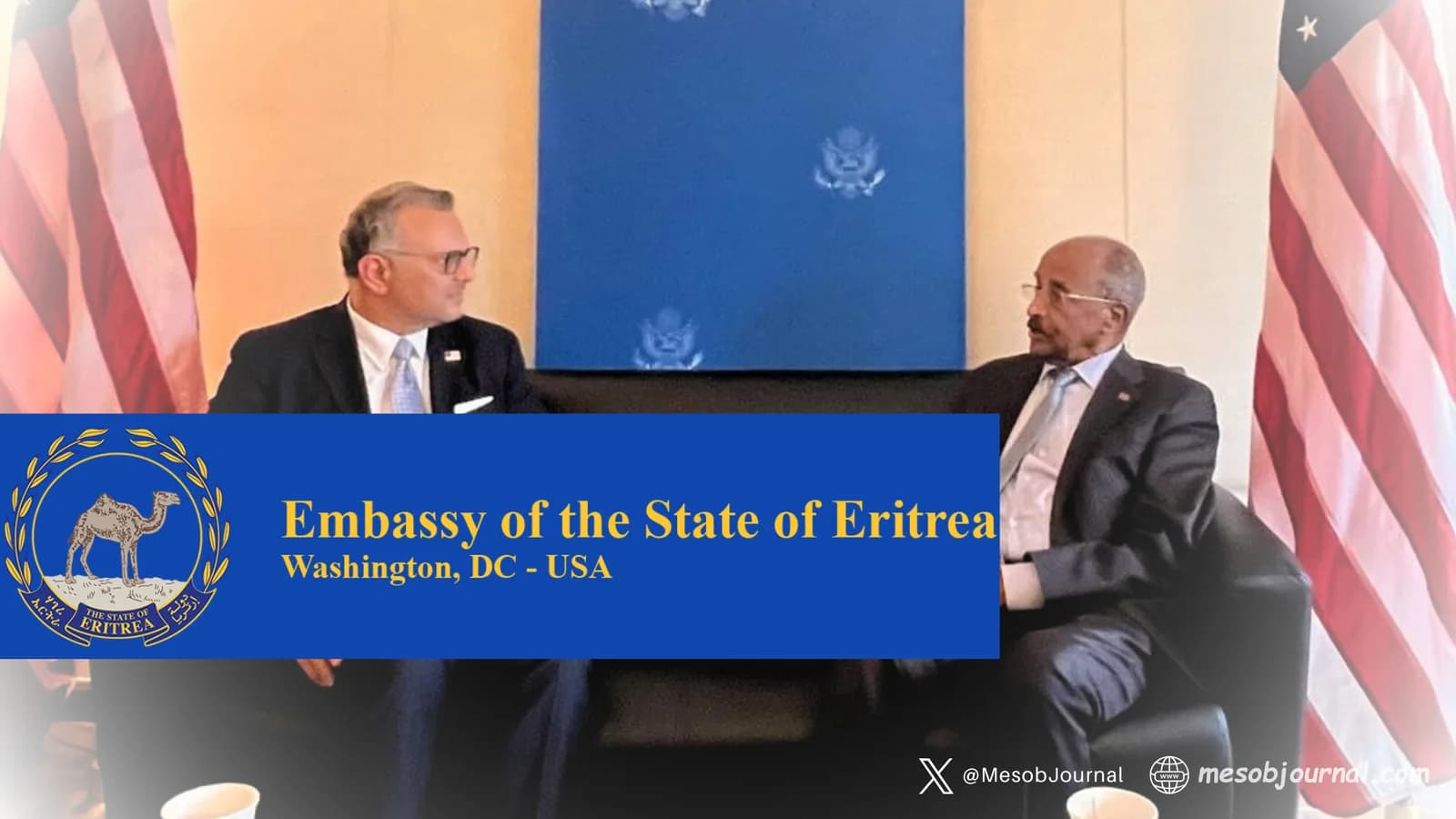
Eritrea Hits Back at Detractors of U.S. Engagement
Eritrea’s embassy in Washington has pushed back against critics of a possible reset in Eritrea–United States relations, saying recent commentary has sought to undermine a serious opening for constructive engagement by recycling old and discredited claims. In a statement dated Apr

Inside Ethiopia’s State-Media Campaign Against Eritrea
Ethiopia’s state broadcaster has crossed another dangerous line. Then again, this is not new. And it almost certainly won’t be the last time. For months, EBC’s Amharic-language output has been full of this kind of messaging — blunt, emotional, territorial, and clearly aimed at a