

Ethiopia: Tigray’s Urgent Warning Exposes Abiy’s War Path
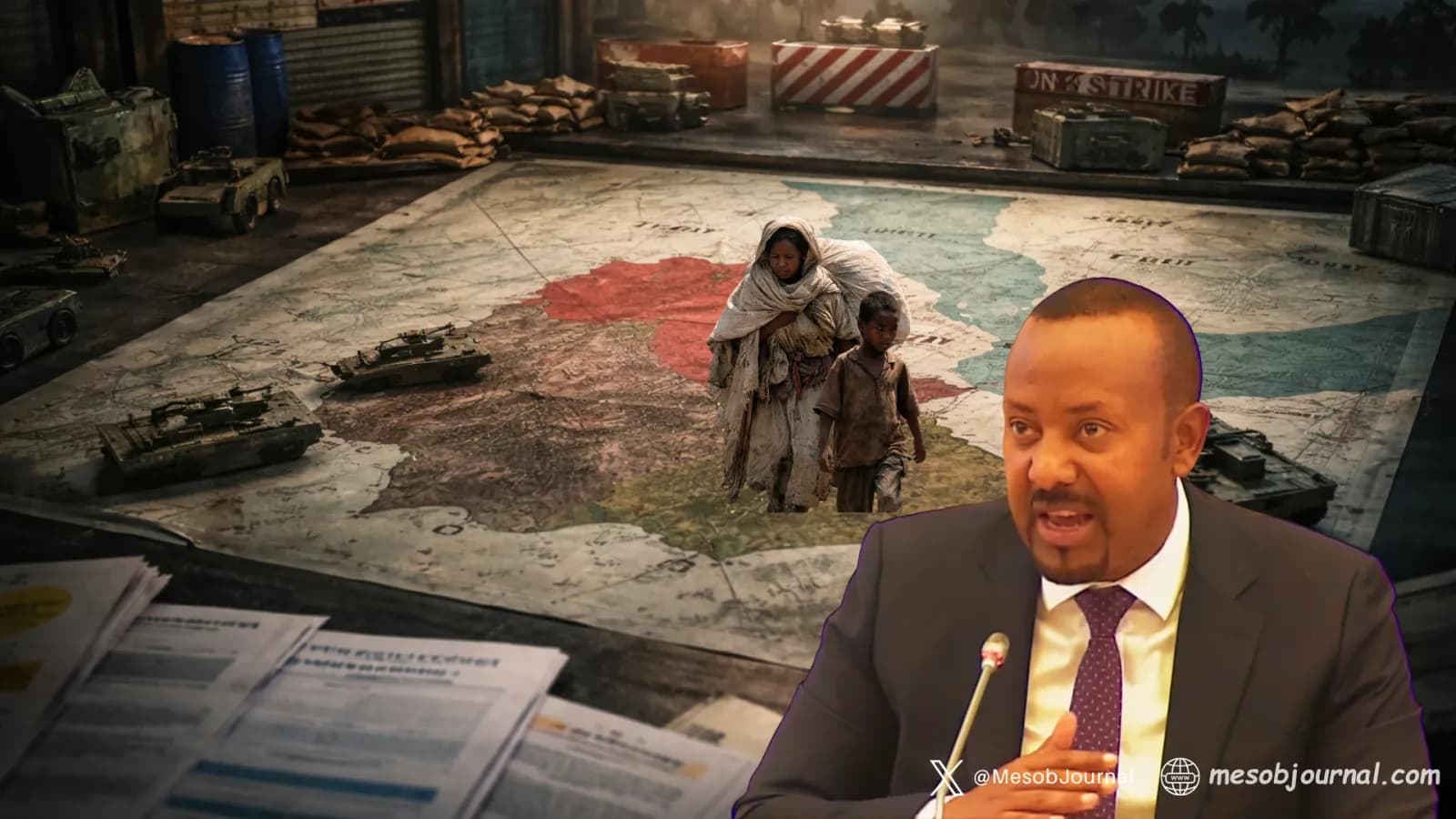
As Ethiopia moves into its 2026 election cycle, Tigrayan political actors say siege conditions are tightening again and federal force deployments are pointing toward renewed war.
The most serious signal right now is not coming from Addis Ababa’s talking points. It is coming from Tigray. The urgent call issued by Tigrayan political actors is blunt in both substance and implication: the squeeze is back, the ring around Tigray is tightening, and the conditions for another war are being rebuilt.
Tigray’s warning is not framed as ordinary political friction. It describes a coordinated pattern of pressure. Budgets are being suspended. Banking and financial access are being crippled. Fuel flows are being halted. Trade and transport are being restricted again. And, most dangerously, federal forces are said to be moving into positions that look less like deterrence and more like encirclement.
That combination matters. On their own, any one of those moves could be dismissed by Addis Ababa as an administrative dispute, a security precaution or a technical disruption. Taken together, they point somewhere else entirely. They point to coercion. They point to a region being weakened from multiple directions at once. And they point to a government using the tools of the state not to stabilize a fragile peace, but to manufacture leverage through pressure.
That is why the urgent call should be read as more than an appeal. It is a warning about trajectory. Tigrayan political actors are not merely saying that tensions are high. They are saying that the architecture of a new conflict is being assembled in plain sight.
Their demands reflect that reading of the moment. They are calling for the demobilization of forces around Tigray, the lifting of blockades and restrictions without preconditions, the restoration of basic services and economic access, meaningful support for dialogue, the safe return of displaced people, and the restoration of Tigray’s territories to their pre-2020 status. In plain language, the message is simple: reverse the pressure now, or the road ahead leads back to war.
The timing makes the warning even harder to ignore. Ethiopia’s 7th General Election is no longer a distant event on the calendar. The National Election Board of Ethiopia says voter registration began on 7 March and runs through 6 April, with the national vote scheduled for 1 June.
That matters because election seasons in fractured states do not always produce accommodation. Sometimes they sharpen confrontation. A government facing internal strain, unresolved regional territorial disputes and thinning legitimacy can decide that escalation is politically useful. Under those conditions, war stops being a failure of politics. It becomes an instrument of politics.
That is the real significance of the warning from Tigray. It is not describing a misunderstanding between equal actors. It is describing a center that holds the army, the budget, the bureaucracy and the means of territorial pressure — and is accused of using all of them at once.
This is also why the language of “rising tensions” can be misleading. Tensions do not rise on their own. They are produced by decisions. Troops are deployed by decision. Budgets are withheld by decision. Banking access is blocked by decision. Fuel is interrupted by decision. Trade routes do not tighten themselves. When several of those decisions converge around one region at the same time, that is not drift. It is design.
Another war in Tigray would not stay contained inside Tigray. It would send shockwaves across the Horn of Africa, deepen cross-border instability, harden existing fault lines and raise the risk of a wider regional confrontation. Eritrea would once again face the fallout of a crisis driven from inside Ethiopia, while outside powers would find fresh openings to exploit another round of chaos in the region.
That is what makes the present moment so dangerous. The warning coming out of Tigray is not only about fear. It is about pattern recognition. War is prepared step by step, long before the first major battlefield headline.
What is taking shape now should be called by its proper name. This is not stabilization nor a state management. It is war preparation carried out through administrative pressure, territorial pressure and military positioning.
Abiy Ahmed is generating instability. If the siege tightens, if the encirclement holds, and if the pressure keeps mounting, the Horn of Africa will once again be forced to pay for a crisis made in Addis Ababa.
Related stories

Inside Ethiopia’s State-Media Campaign Against Eritrea
Ethiopia’s state broadcaster has crossed another dangerous line. Then again, this is not new. And it almost certainly won’t be the last time. For months, EBC’s Amharic-language output has been full of this kind of messaging — blunt, emotional, territorial, and clearly aimed at a
Ethiopian Regimes and the Fabled Hyena
The preeminent author, historian and tegadalay Alemseged Tesfai brilliantly detailed the “consistently suicidal pursuit of successive Ethiopian regimes to own Eritrea or parts thereof” in his piece titled “March of Folly Re-enacted: A Personal View“. It was published 27 years ago
Abiy Ahmed’s Sudan Game Is Now in Plain Sight
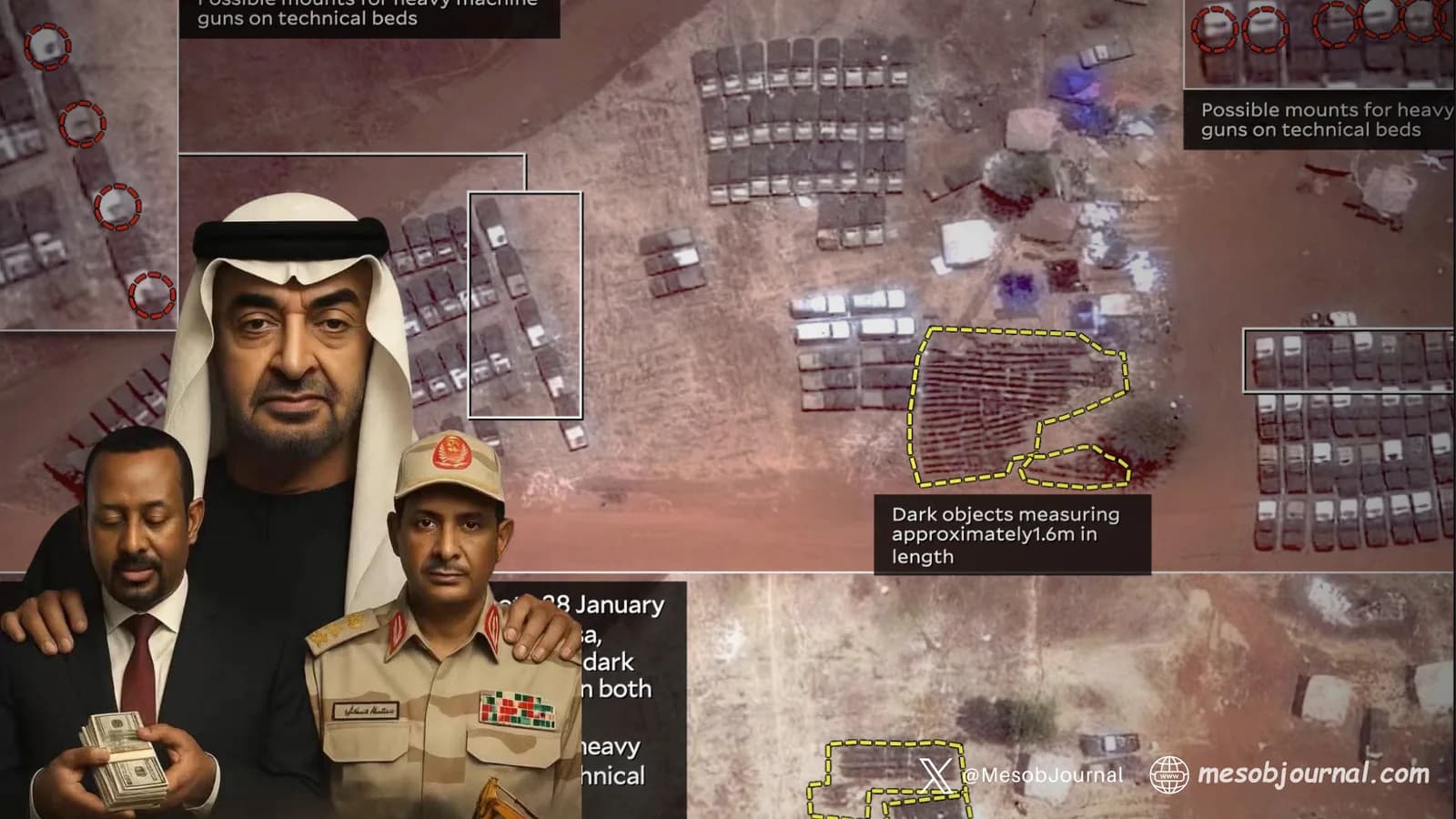
The mask keeps slipping. A new report by Yale’s Humanitarian Research Lab says it has reached a high-confidence conclusion that military assistance to Sudan’s Rapid Support Forces is taking place inside an Ethiopian National Defense Force base in Asosa, in Ethiopia’s Benishangul-
Abiy Ahmed Can’t Hide Ethiopia’s Collapse Behind Diplomacy
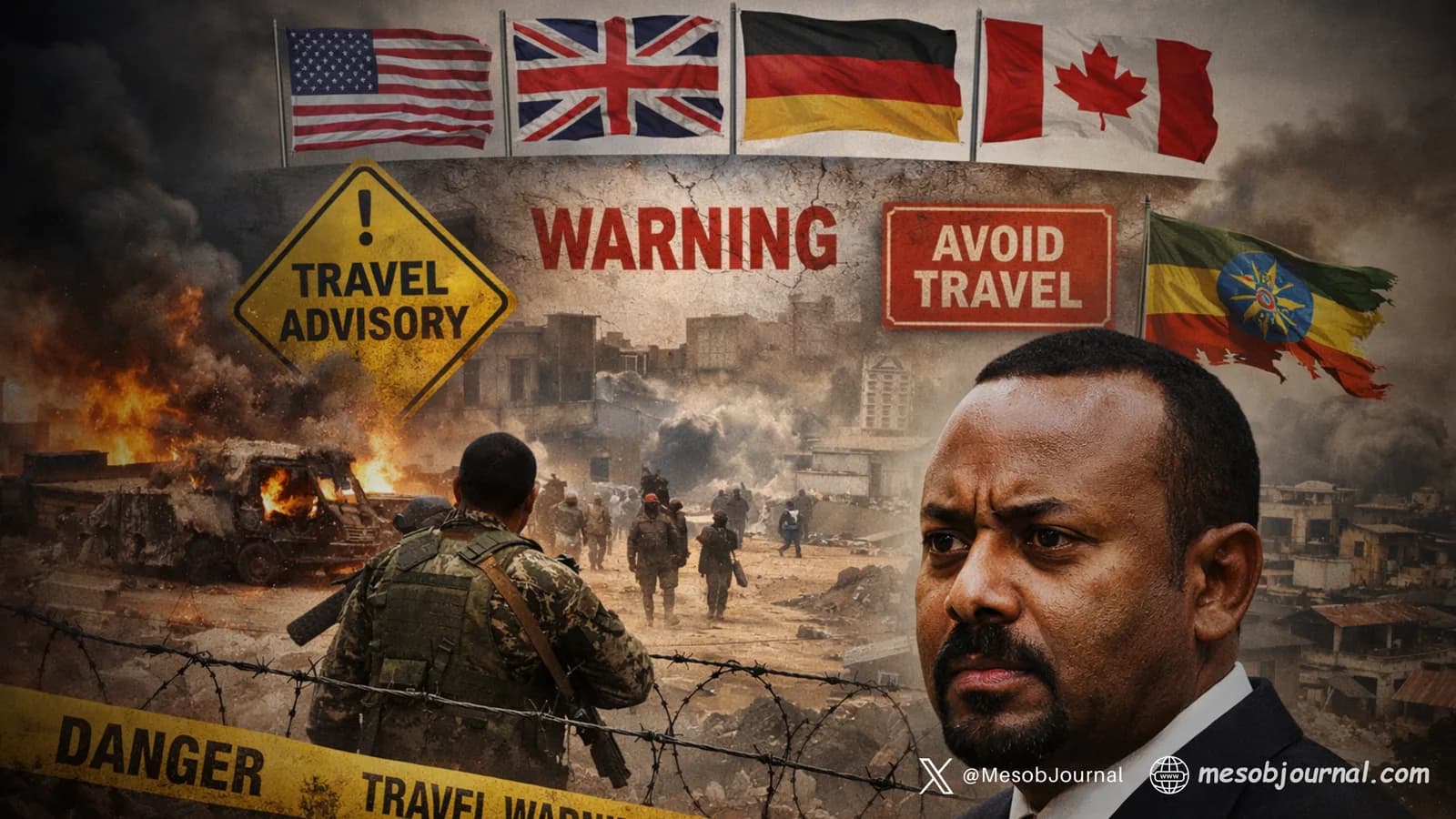
You can lie in speeches. You can posture at summits. You can wrap failure in diplomatic language and hope the world only reads the headline. But official travel advisories have a way of cutting through the performance. They are written carefully, especially by countries that have