

Ex-FM Gedu Andargachew: Abiy Lied About Eritrea “Envoy” Claim
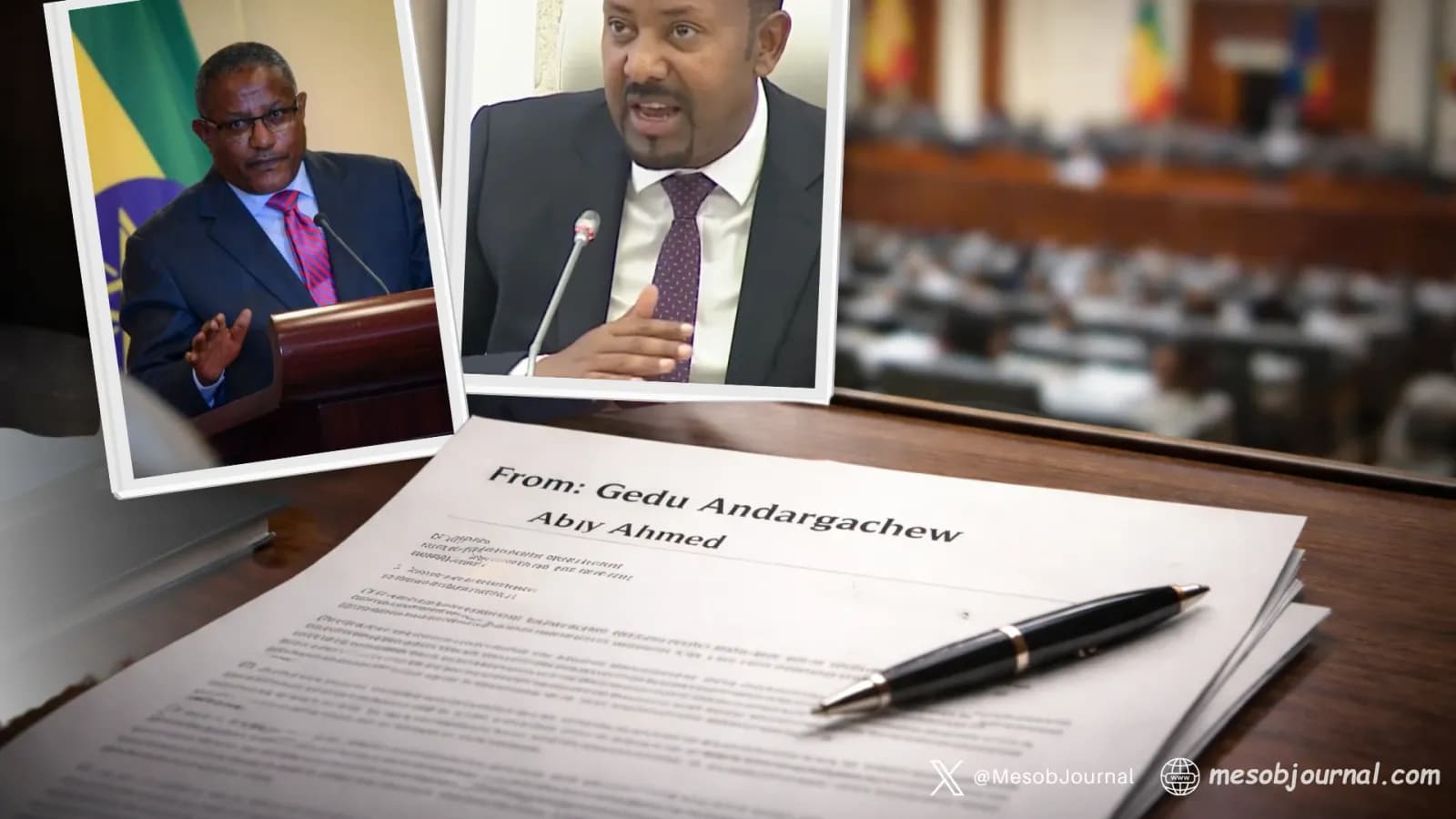
An open letter from former Ethiopian foreign minister Gedu Andargachew has directly contradicted Prime Minister Abiy Ahmed’s claim in parliament that Gedu was dispatched to Eritrea to convey Abiy’s concerns about alleged abuses against civilians in Tigray.
Abiy’s parliamentary storyline—presented on February 3, 2026 as part of a broader attempt to reframe the Eritrea rift around “Tigray atrocities” rather than “sea access” politics—has already drawn a sharp rebuttal from Eritrea’s Information Minister Yemane G. Meskel, who described it as narrative cover for a war agenda. The new letter goes further: it challenges Abiy’s version using a named “witness” Abiy publicly invoked.
“It is entirely false… a complete fabrication”
In the translated letter dated February 5, 2026, Gedu says Abiy’s account of his role is not just mistaken, but invented.
He writes that Abiy’s assertion—that Gedu was serving as foreign minister after the Tigray war began and was sent to Eritrea as a messenger regarding alleged crimes—“is entirely false… a complete fabrication.” Gedu adds he stepped down “within days of the outbreak of the war,” making Abiy’s timeline implausible on its face.
He also rejects Abiy’s framing that he carried a message of restraint—summarized by Abiy as: “Do not harm my people.” Gedu’s response is blunt: he cannot serve as a witness for a claim that contradicts what he says happened, and if Abiy wants someone to validate that version, “you would need to look elsewhere.”
What Gedu says the Eritrea trip was about
Gedu confirms one narrow point Abiy referenced: he did travel to Asmara in early January 2021, accompanied by a Foreign Ministry official, to deliver a message to President Isaias Afwerki.
But he describes that message as three points—none of them about civilian suffering in Tigray:
- congratulating President Isaias on the joint success against the TPLF
- thanking Eritrea for receiving and supporting Northern Command members
- warning about a growing international campaign alleging human rights violations, and urging coordinated vigilance
Gedu adds a critical detail: he says he asked why Ethiopia wouldn’t formally request Eritrean forces withdraw—given Ethiopia had publicly declared the war over and withdrawal demands were growing—yet claims Abiy explicitly instructed him not to raise withdrawal “under any circumstances.”
The line that blows up Abiy’s ‘humanitarian concern’ claim
Gedu also recounts a private exchange that sharply undercuts Abiy’s attempt to portray himself as warning Eritrea not to harm civilians in Tigray. He says that after an executive meeting where he urged restraint—warning that abuses against civilians would only revive support for the TPLF—Abiy later summoned him privately and dismissed the entire premise of protecting “the people of Tigray.” In Gedu’s account, Abiy told him:
“Gedu, do not think the Tigrayans can recover from this defeat and rise again. We have crushed them so they will not rise. People keep saying ‘the people of Tigray, the people of Tigray.’ Who are the people of Tigray above? We have broken them so they will not rise again. We will break them even further. The Tigray we once knew will never return.”
A second strike at Abiy’s “pivot” narrative
The timing matters. Abiy’s February 3 speech, as Mesob Journal reported, attempted a quiet repositioning: casting today’s rupture with Eritrea as a dispute rooted in alleged crimes in Tigray, while Eritrea argues Addis is repackaging the past to justify a new escalation track.
Gedu’s letter doesn’t merely dispute one anecdote. It attacks the credibility of the pivot itself: the centerpiece claim that Abiy “warned” Eritrea about harming civilians is described as fiction, while the only confirmed message Gedu says he delivered focused on managing accountability risk, not protecting civilians.
The bigger implication
Once a leader publicly names a supposed envoy as a witness—then that witness publishes a written contradiction—the issue stops being “interpretation” and becomes record. At minimum, Gedu’s letter narrows Abiy’s room to maneuver: if the parliament speech was meant to reframe the Eritrea standoff as moral outrage, a key supporting pillar has now been pulled out in writing.
Related stories
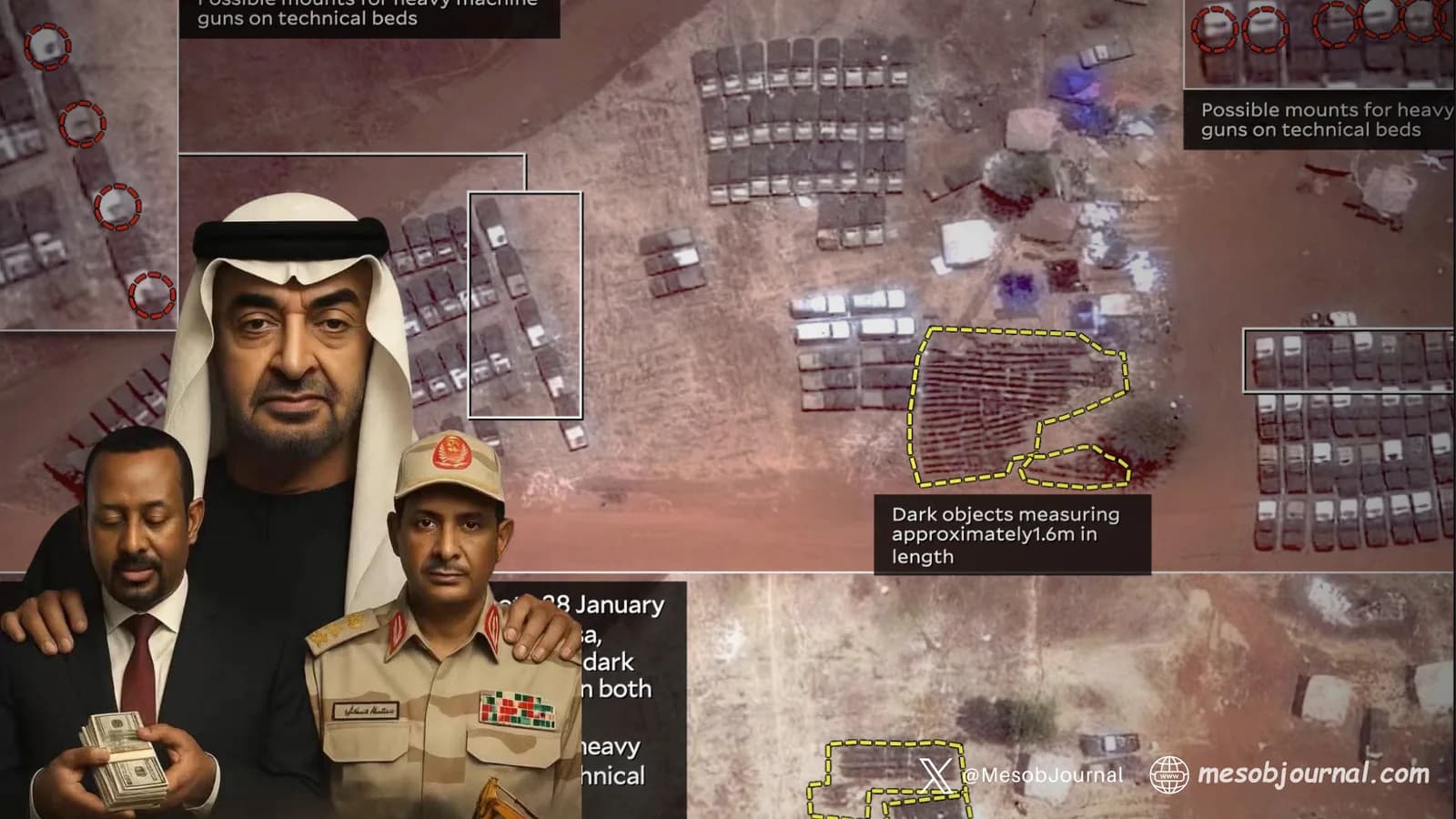
Abiy Ahmed’s Sudan Game Is Now in Plain Sight
The mask keeps slipping. A new report by Yale’s Humanitarian Research Lab says it has reached a high-confidence conclusion that military assistance to Sudan’s Rapid Support Forces is taking place inside an Ethiopian National Defense Force base in Asosa, in Ethiopia’s Benishangul-

Abiy Ahmed Can’t Hide Ethiopia’s Collapse Behind Diplomacy
You can lie in speeches. You can posture at summits. You can wrap failure in diplomatic language and hope the world only reads the headline. But official travel advisories have a way of cutting through the performance. They are written carefully, especially by countries that have
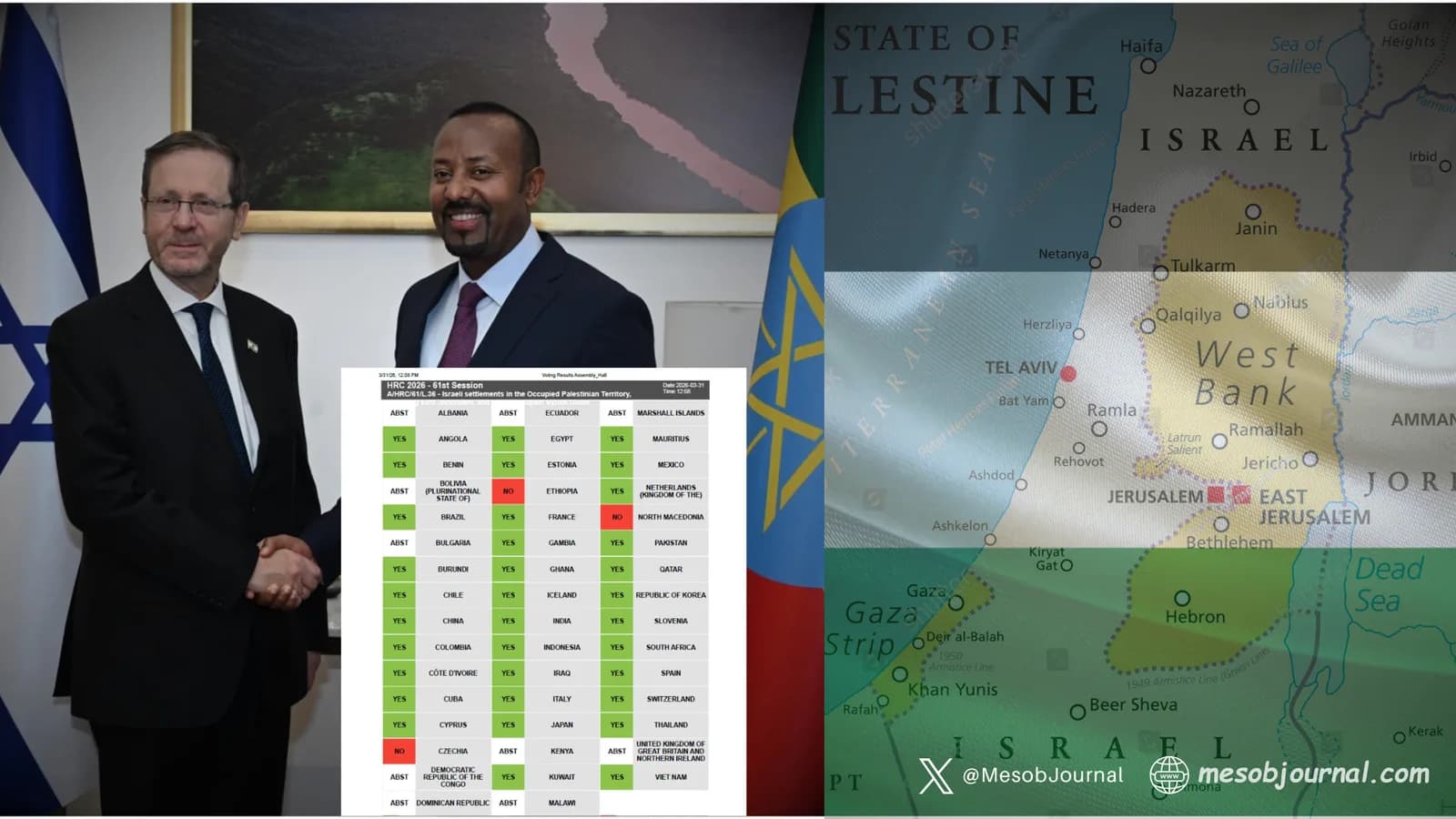
Abiy Ahmed’s Shameful UN Vote Betrays Africa and Palestine
There are votes that expose a government’s priorities more clearly than any speech ever could. Ethiopia’s “No” vote at the UN Human Rights Council on 31 March, against a resolution reaffirming the illegality of Israeli settlements in the Occupied Palestinian Territory and the o
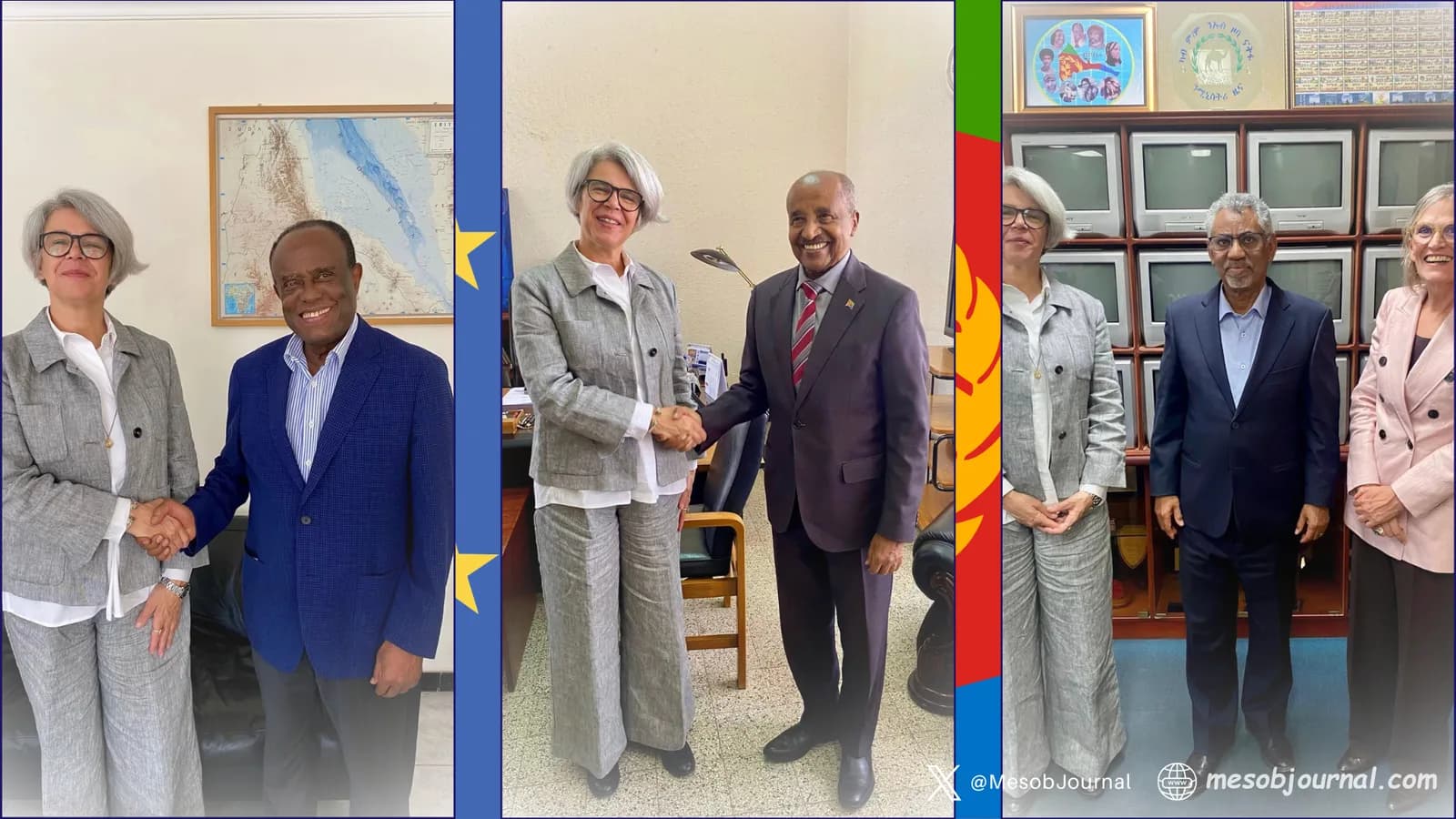
Why Eritrea Matters Again to the European Union
Brussels is not undergoing a moral conversion. It is responding to a harsher strategic map in the Horn of Africa and the Red Sea. Annette Weber, the European Union’s Special Representative for the Horn of Africa, was in Asmara this week, and the visit matters less for any dramati